Blacksmithing is one of the world’s oldest arts, and until very recently, was an essential part of life on our planet. While modern technology has changed the ways that we produce metals and other materials, the fundamentals of the blacksmith have stayed the same. It takes heat, force, and expertise to turn metal into something functional and beautiful.
It all begins with the forge, which heats up the metal to the point where it is able to be moved and bent into new shapes. It will be hammered and shaped with many different tools and a blacksmith, and once the metal is cool, its shape has been changed permanently. Not all metals react to heat in the same way. Some of the first lessons in blacksmithing are understanding how heat affects different materials and learning how to control the temperature of a piece. Not only does this change how easy it is to work a material at any given moment, but it also changes how it will react when cooled down to determine its ultimate strength.
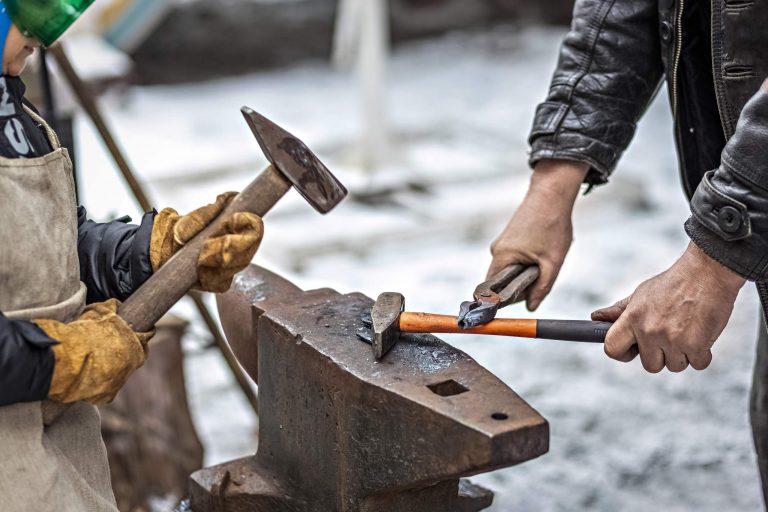
Hammer control is another vital piece of blacksmithing that a student will begin to learn early on. It is important for a hammer to strike at a specific angle with the correct force. If a blacksmith uses just as much force, but strikes at a slightly different angle than they intended, a piece could take an undesirable shape. This is why it’s much better to be precise than fast in the first place; over time the blacksmith will learn when and how to strike the metal to draw it out, set it, flatten it, or make any of a hundred other moves on the material, all the while learning to be very efficient with their movements.
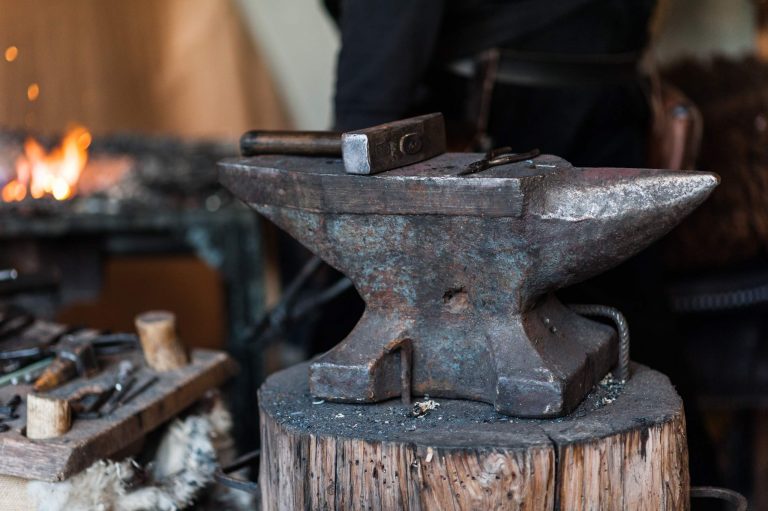
In blacksmithing, the anvil plays a vital role for much of the shaping process and is where much of the work will take place. A blacksmith doesn’t simply use a hammer on an anvil to shape their piece, but they also utilize the various other features of an anvil to aid in making a project. From the horn to the heel, the anvil is used in any number of ways to assist a blacksmith in shaping their piece and adding detail to a design. Blacksmiths will learn many different ways of using an anvil to manipulate material.
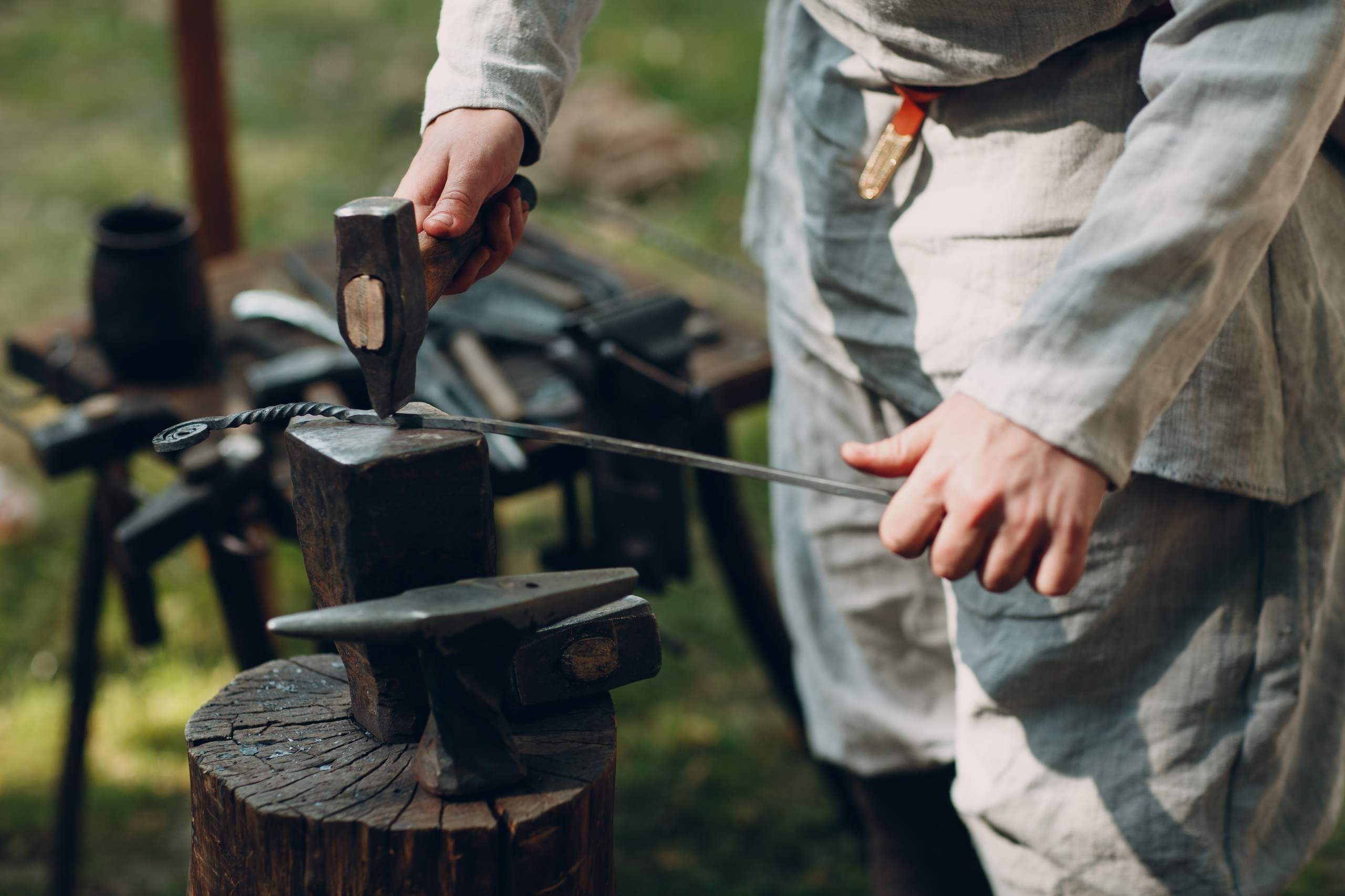
Once students have begun to master a few skills and have grown comfortable in the workshop, they will start adding more complex techniques and skills into the pieces they’re making, and the projects that they work on. There are many more techniques in blacksmithing than drawing out, upsetting, punching, twisting, cutting, and bending. Students will be able to use these techniques to make a variety of different functional items from simple hinges or hooks to more complicated items like gates or door frames.
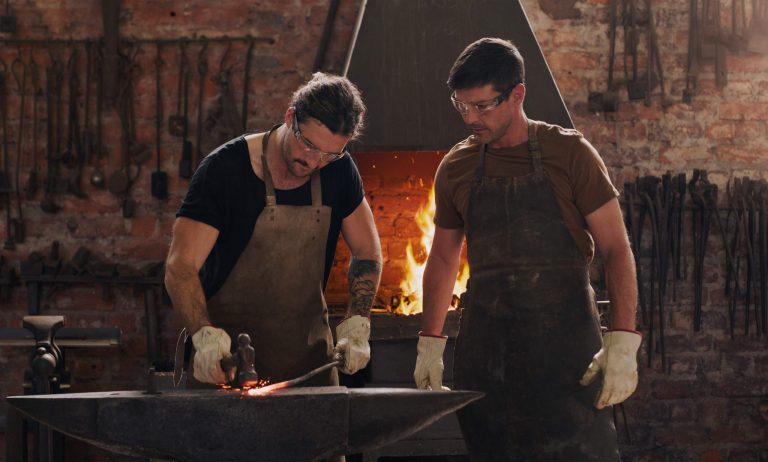
Safety is also an important part of blacksmithing that all students will need to learn before they start to work on projects. Blacksmithing takes place in a dangerous environment with hot metals, large tools, and flying debris, so it is necessary to be very well equipped for this type of work. By wearing the appropriate safety equipment, learning the proper use of tools, keeping a safe working environment, a blacksmith can keep themselves from hurting while making things.
A major reason students may want to take blacksmithing classes is because of how rewarding and immediately satisfying it is to work with metal. It doesn’t take long to turn an ingot or bar of steel into some type of functional or aesthetic product. Each piece is formed by a series of movements, all of which are obvious as the shape of the piece changes with a hammer strike.
Many artists and makers have used their blacksmithing skills to create functional and decorative products that have a modern style. These products may include sculptural work, home furnishings, interior design, or custom hardware. As blacksmithing techniques have been expanded on for use in other creative and industrial pursuits, blacksmithing remains popular among makers.
For those wishing to learn how to begin working with metal, blacksmithing classes will provide a very clear path on how to get started. The basics that are taught in blacksmithing, like how to heat metal and control it once the steel is hot, the use and proper control of a hammer, and knowledge of how metal reacts to heat, are essential for students as they will use those skills for future projects.
As blacksmiths, the relationship between the material and the craftsperson is the fundamental concept to understanding the craft. Once someone is able to understand how heat will affect metal, and how force will change the shape of a piece, then a craftsman can turn their material into a durable and beautiful end product that has stood the test of time over many generations.