There are numerous skills a blacksmith develops, and the importance of understanding temperature cannot be overstated. Metals undergo significant changes when heated, and learning to identify these changes is crucial to the blacksmith’s overall efficiency and the quality of their work. This, in turn, explains why a blacksmith’s mastery of temperature is the foundation of most blacksmithing.
While working in the forge, metals will become more malleable, depending on the type of metal being used and the level of heat being applied. This, as expected, affects the manner in which the metal is manipulated. However, the temperature of the metal also affects how the piece is manipulated, as different temperatures will cause the metal to react differently to the blacksmith’s actions. By working the metal at the correct temperature, the blacksmith can more easily manipulate the material. Moreover, they will also be less likely to create stress within or damage the piece due to excessive heat.
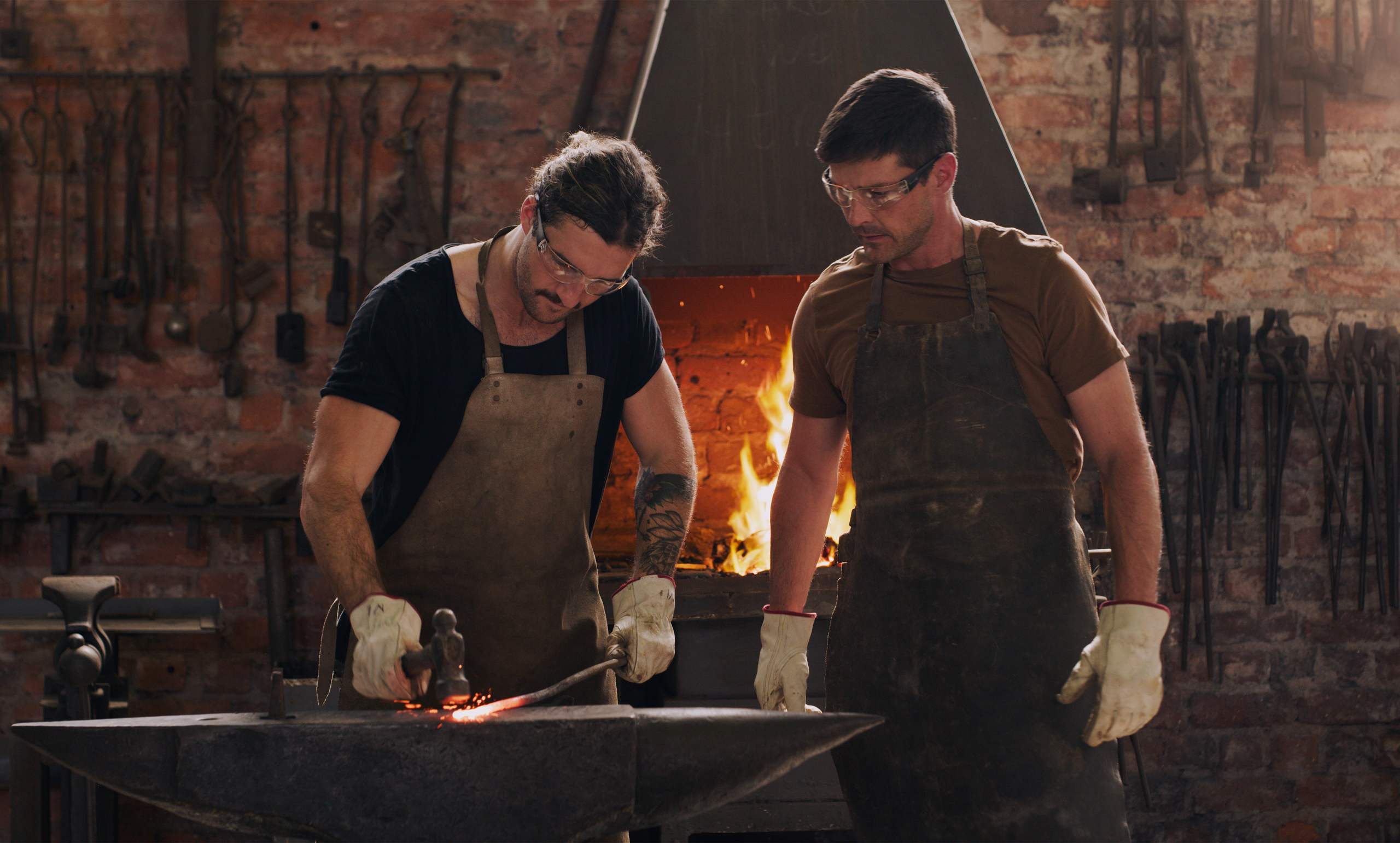
Blacksmiths who have mastered this aspect of blacksmithing know the temperatures at which they need the metal when using various techniques. They also know the color ranges of different temperatures. Steel, for instance, turns through numerous colors as it is heated. The ability to judge temperatures according to color is the essence of knowing the proper temperature range for working. However, this aspect of blacksmithing takes some time to learn.
Blacksmiths must ensure that they are heating the metal to the correct temperature. If working on a piece of metal that isn’t properly heated, the blacksmith will find it difficult to move the metal. If they do force the metal to move, there will be a greater risk of structural damage. Moreover, they will also be at a much higher risk of cracks or structural weaknesses. On the other hand, a blacksmith will experience similar difficulties if they overheat the piece of metal. If heated too high, they may find the surface of the metal degrading or crumbling. Alternatively, the structure of the metal will weaken, which will again result in structural damage.
This aspect of blacksmithing, in particular, will become a crucial factor when they are performing heat treatments. Hardening and tempering require that the piece of metal be kept at a very specific temperature throughout the process. By knowing how to maintain the correct temperature, blacksmiths will be able to heat treat the metal according to specific needs.
With the advent of modern equipment, the use of thermometers and other methods to determine temperature have become more common in today’s forge. However, many blacksmiths still rely on temperature to determine the proper heating for the job, which is another factor in the efficiency of the blacksmith and quality of their work.
Furthermore, the type of furnace and fuel source used will also affect temperature, meaning blacksmiths must also determine the ideal method to achieve and maintain a desired temperature. There are many different furnace setups which blacksmiths may use, including coal, charcoal, and gas.
Students in blacksmithing programs must, therefore, also learn to recognize the changes that occur during temperature changes. In the initial stages, blacksmiths must know to focus on the heat before focusing on the strength and skill they apply to their metal working. This also means that blacksmiths must know how to identify the temperature of the metal. By recognizing the color changes that occur, they will know the temperature of the piece, and when it is time to stop the piece or heat treat it.
At the most basic level, blacksmithing is all about heat. It is where the raw materials become workable and where the ideas of a blacksmith become a physical reality. Through proper control of the temperature of their metal in the forge, blacksmiths have the opportunity to control that transition and create the piece with their own two hands, resulting in a piece of work that is truly their own. This is what sets the forge apart in blacksmithing. It is truly the center of the craft and what blacksmiths turn to for inspiration.