All forged items start as one thing: a piece of metal. It may end as a useful tool, a fancy decoration, or a work of art, but the path from unworked material to finished product involves the same steps: planning, knowledge, and attention.
The first step is figuring out what kind of metal to use. Different kinds of steel or iron have different characteristics that determine their strength and flexibility and how they react to heat. Picking the right metal is important, because knowing the characteristics of what you’re working with is vital to the success of the project.
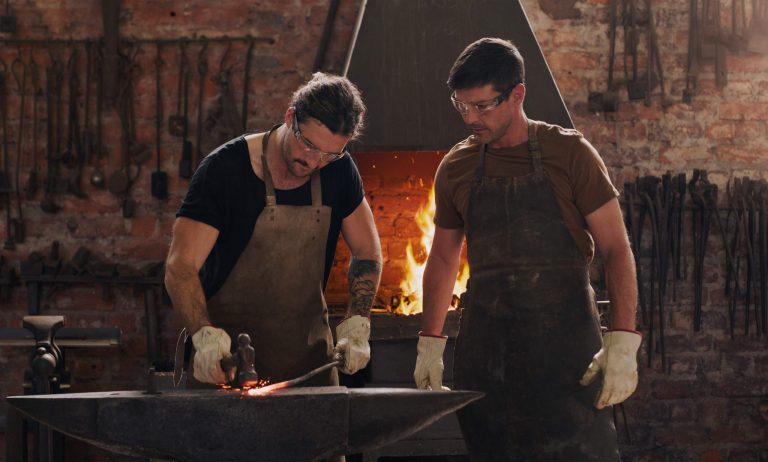
Now the metal is in the furnace or forge. It is heated up until it is hot enough to work with. The metal becomes softer and easier to shape. The blacksmith tries to keep the metal at a specific temperature for the task, which requires both speed and patience.
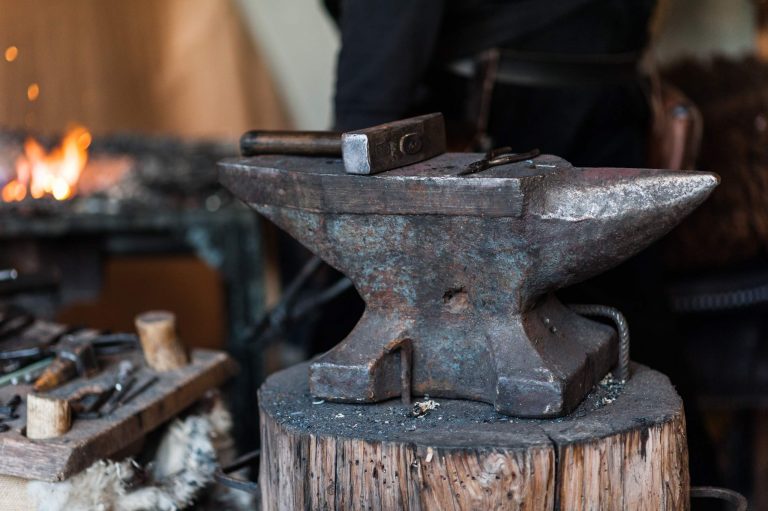
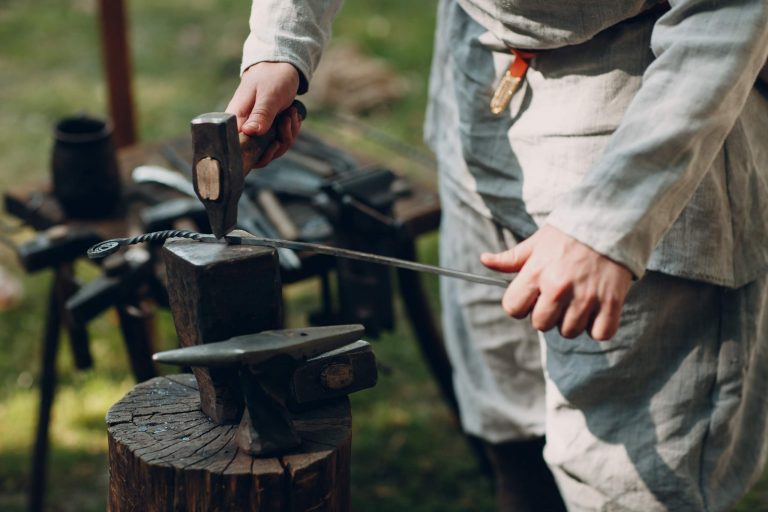
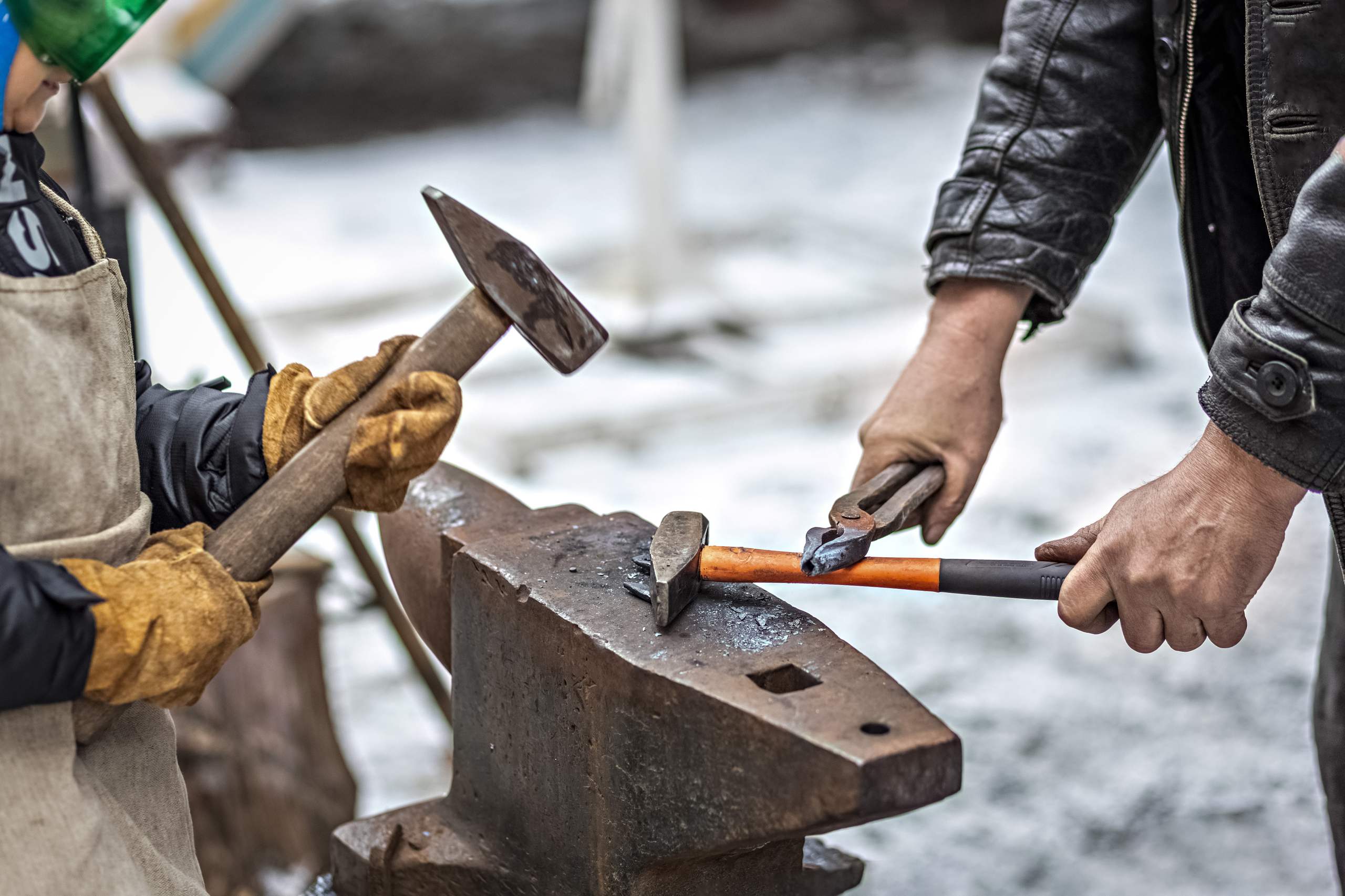
At this point the metal is on the anvil. By carefully striking the hot piece of metal, the blacksmith forces it to gradually change shape until it is where he wants it to be. Contrary to what the movies suggest, forging is not about being the first one to pick up the hammer, or the loudest one, or the one with the most strength. Instead, a successful forging operation is about controlled force. The metal moves because the blacksmith moves it in rhythm, not because he is pounding away as hard as he can.
The item can be bent, curved, twisted, punched, or tapered by using specialized techniques. Many projects require multiple heating up in order to gradually reach the desired form.
Some forged pieces are made up of more than one component, and these are joined together with various methods that predate modern welding. There are several different techniques that blacksmiths can use to join metal together. Some of these methods can still be found today due to their aesthetic appeal and durability.
Cleaning, brushing, polishing, and finishing touches are all part of the final process. The piece is made to be both visually pleasing and structurally sound. Some craftsmen intentionally choose to highlight the hammer marks on their creations to showcase the manual effort that went into their projects.
Blacksmithing remains a satisfying craft because it gives immediate visual feedback as to how each piece of metal should behave. You can literally watch as the metal responds to the blacksmith’s decisions and actions. There are not many creative processes in which you can observe such a clear cause and effect relationship.
The same techniques that blacksmiths have developed over centuries are still in use today in contemporary settings, where they can be used to create furniture, ornate metalwork, sculptures, tools, and custom projects. Although the methods have changed over the years, the core principles remain the same.
The process of forging gives students a good basis on which to build their understanding. Each project involves many different techniques and skills that allow the blacksmith to move from a raw lump of metal to a finished product.
At its core, blacksmithing is about changing raw materials into finished goods. It combines heat, motion, and skill to turn metal into something both practical and beautiful.